by 3DF Staff –
Travel Diary from Tom Sciannati
Calgary – It is July, and after celebrating Canada Day at Niagara Falls, I still have the rest of the summer ahead of me. I had recently joined 3DF on a part time basis, almost like an intern. I like the company’s vision and know, much like hockey prospect publications, what it can do for the game.

I work in the Canadian Hockey League and spend most of the season in Ontario and Quebec, leaving few opportunities to travel to Western Canada. So I did what many Canadians dream of doing during the summer. Aside from spending a day at the lake or attending a CFL game, I decided to visit the world famous Calgary Stampede.
I booked the next flight to Calgary, and before long I finally was on my way to Western Canada.
As my plane landed, I realized it had been quite some time since my last visit to Western Canada. Calgary immediately brought out that outdoor western feeling, as though I needed to buy a cowboy hat and find some cattle to wrangle. Then I remembered my least favourite CFL team, the Toronto Argonauts, was in town that night to face the Calgary Stampeders. Suddenly, this became even a better trip. I went online to purchase the best available seat, and to my surprise there were plenty of excellent options. I chose a seat directly behind the Stampeders bench. After collecting my luggage, I caught an Uber and headed straight to the Hyatt downtown.
When I arrived downtown, the streets were filled with cowboys and cowgirls. I wondered if this was normal. Then I reminded myself the Stampede was only a few days away. Even so, I still found myself wondering if this was simply everyday life in Calgary.
While checking in, the friendly hotel clerk asked if I was in town for the Stampede.
I replied, “Yes, and for the Stampede–rs.”
I asked if she had checked in any visiting Argonauts fans. She said she was not aware of any. At that moment, it became a real possibility that I was going to be the only non Calgarian at McMahon Stadium.
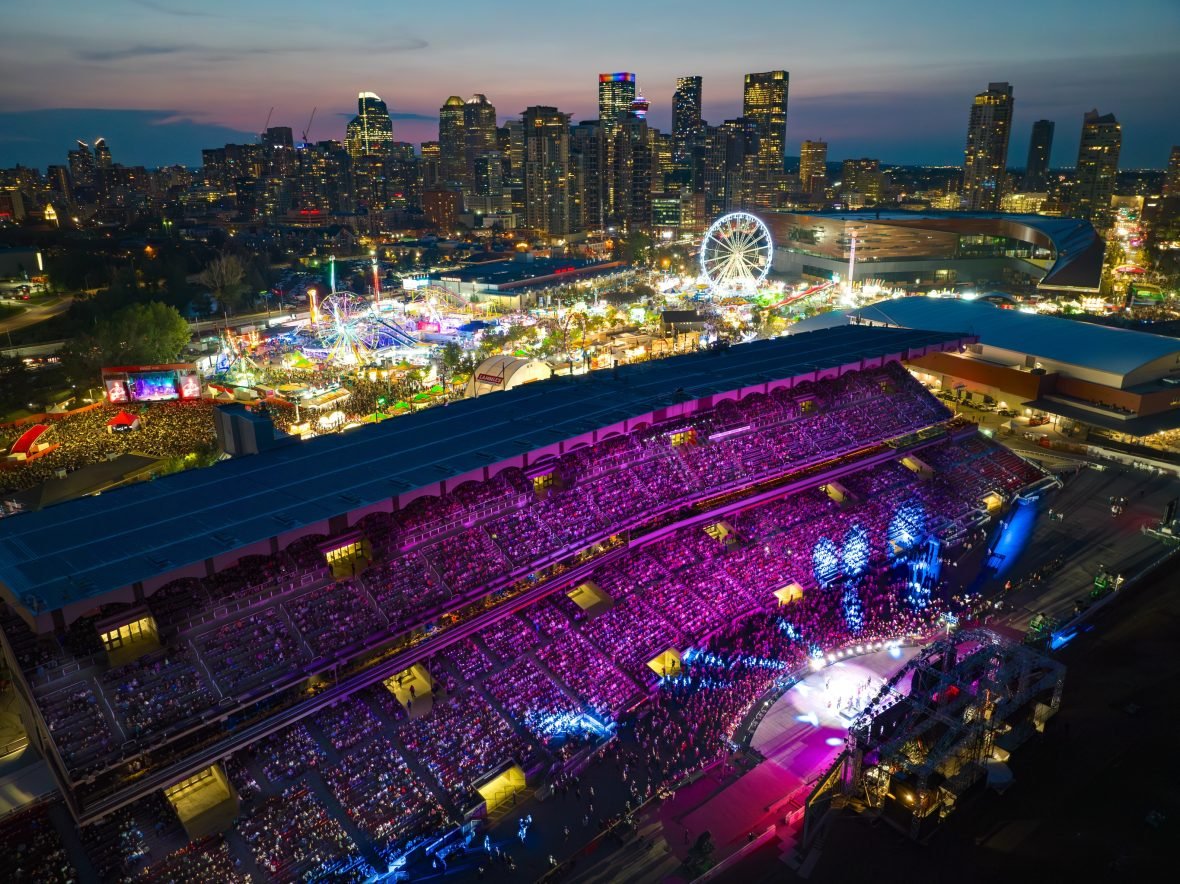
After taking a quick nap, I headed straight to the Stampede grounds. It was quite the scene for an event that hadn’t even started. I could not begin to estimate how many thousands of people were already on the grounds, but it was easy to imagine the economic impact the Stampede has on the city of Calgary. The atmosphere reminded me of what a Friday night at the Grey Cup Festival would be like if it were held outdoors in the summer.

After checking my dates several times, I began to wonder if I had the wrong dates. The crowds were so large that it felt as though the Stampede had already begun. I was soon told they were gathering for what is known as Sneak a Peek Night, the unofficial start to the Stampede that features discounted admission.
After spending a few hours bumping shoulders with people from all over North America, it was time to head back to the hotel, get ready, and make my way to the other Stampede taking place that evening at McMahon Stadium.
I arrived at McMahon Stadium about an hour before kickoff. My first impression was the number of tailgaters and how much fun everyone appeared to be having. Barbecues were fired up, tables were covered with every kind of food imaginable, reminding me of a Sizzler buffet, while music blasted throughout the parking lot.
I loved every minute of it.
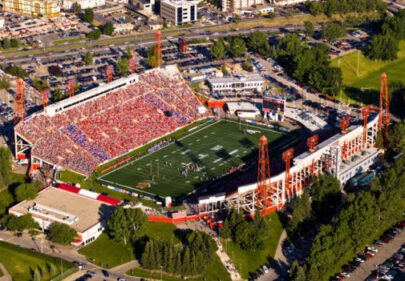
I also noticed just how large the stadium property is. It felt large enough to fit two CFL stadiums and an NHL arena on the same site.
As I made my way around the stadium, I could not help but notice its barn like appearance, especially in the south end zone. Maybe it was because I was attending the Stampede, but I could not shake the feeling that it resembled horse stables. In a way, I appreciated how McMahon Stadium reflects the western heritage that defines Calgary.
A historical fact worth noting is that McMahon Stadium is named after brothers Frank and George McMahon, whose $300,000 donation helped make the stadium’s construction possible. The original proposal was to call it “Devil’s Head Stadium,” after Devil’s Head, a mountain summit in the Rocky Rockies.
Once inside the stadium, it became clear that what the exterior walls do not hide is true. McMahon Stadium is an older facility. I still remember watching the opening and closing ceremonies of the 1988 Winter Olympics at McMahon Stadium. This stadium has extensive history.
But as you enter the seating bowl from the concourse my first impression is that the view is outstanding. The seats are not the most comfortable, but what stadium is, aside from those sitting in a luxury suit. How is the sound system? The sound system checked the box. The video board did the same.
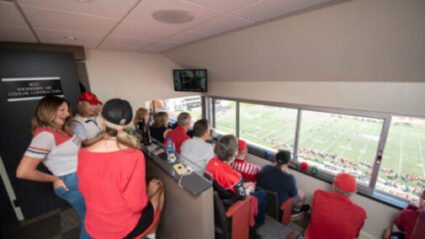
After settling into my seat for my first look at the field, I began taking in the rest of the stadium. That was when I noticed what I believe is McMahon Stadium’s biggest challenge. The facility lacks the number of club and luxury suites that modern sports venues rely on to attract corporate clients and premium ticket buyers. That shortfall is likely costing the organization millions of dollars in potential annual revenue.
With 30 minutes remaining before kickoff, I estimated that perhaps 2,000 fans had taken their seats. At that point, a sellout did not appear likely. Judging by the parking lot, many of the true Stampeders fans were still outside enjoying a tailgate feast that looked like it belonged at a Canada Day party.
I then went back into the concourse where I met and spoke with welcoming fans to discuss the stadium and attendance issue. The overwhelming consensus was that the Stampeders have lost roughly 8,000 fans over the past decade and that many of those supporters will not return until a new stadium is built. Many know people who are big supporters but will rather watch games on television. For others the complaints are about ownership and the decline of stadium amenities. Few also suggested economy being reasons.
To my surprise, several longtime Stampeders fans, many of whom were well informed about the club’s history, told me this attendance pattern is not entirely new for the franchise. Curious to learn more, I researched the team’s historical attendance trends. In the process, I not only gained a better understanding of the Stampeders but also learned a great deal about the history and growth of the city of Calgary.
Starting in the early 1980s, the franchise averaged more than 30,000 fans per game. Just a few seasons later, that number had fallen to roughly 14,000. An attendance drop of approximately 16,000 fans in such a short period is almost unheard of. What happened? A scandal? A pandemic? Had the cattle and oil industries suddenly dried up?
The answer, according to several Stampeders fans, was much simpler.
They told me Calgary has long been a city shaped by boom and bust cycles. For decades, people from across Canada were drawn west by the promise of opportunity, particularly in the oil and gas industry. During the boom years, the city flourished and so did attendance at Stampeders games. Locals even had a nickname for it.
They called it “Cal Boom.”
What happened in the 1980s was a devastating recession triggered by the Alberta oil crash and the introduction of the National Energy Program. The economic downturn led to widespread layoffs, a collapse in the real estate market, and record levels of unemployment across the province.
What surprised me most was learning that the Stampeders’ struggles went beyond the economic downturn. Another fan explained that the team was community owned at the time and faced internal leadership challenges that created additional financial difficulties for the franchise.
Then came the arrival of the NHL’s Calgary Flames, which created a new battle for corporate support in the city. When the Flames arrived, Calgary was still dealing with the effects of the recession. Many businesses had either relocated or closed, leaving fewer companies available to support both professional sports teams. Those that remained were forced to choose where to invest their sponsorship dollars. With the Flames moving into a newer facility and experiencing immediate success on the ice, much of the city’s corporate support shifted toward the NHL club.
The impact on the Stampeders was significant. The franchise lost advertising opportunities and even in stadium sponsorship space at a time when it desperately needed revenue. Combined with the team’s struggles on the field, the arrival of the Flames proved to be a difficult challenge for the Stampeders to overcome.
Then came 1986, a year that changed the franchise forever.
The Stampeders launched one of the most successful sports fundraising campaigns in history. The “Save the Stamps” campaign issued a clear ultimatum to the community: purchase season tickets or risk losing the franchise.
The response was remarkable. The campaign resulted in 22,400 season tickets being sold, proving that Calgary still had a passionate fan & corporate base willing to rally behind the Stampeders.
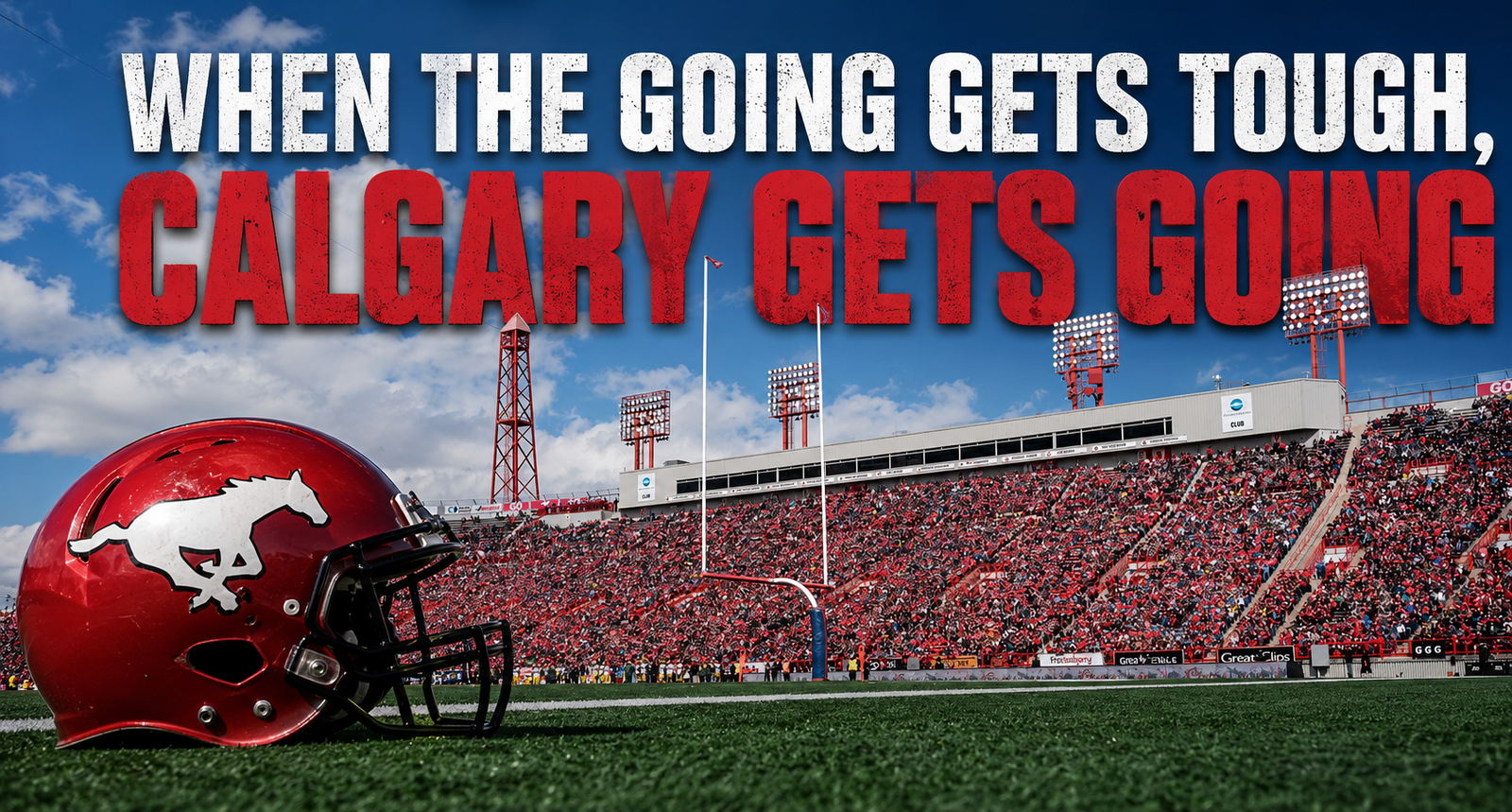
One of the lasting memories from the campaign was arguably one of the greatest sports theme songs ever created. “When the Going Gets Tough, Calgary Gets Going” was a reworked version of Billy Ocean’s hit, becoming the unofficial anthem of a community determined to save the Stampeders.
That same season, under new head coach Bob Vespaziani, the Stampeders finished with an 11 and 7 record and returned to the playoffs.
There were other positive developments for Calgary. The Conservative federal government under Prime Minister Brian Mulroney abolished the controversial National Energy Program, removing energy policies that had been heavily criticized by the Alberta oil industry. The change helped restore confidence in the sector and eased some of the financial pressures facing energy companies.
The immediate impact was a renewed sense of optimism, with oil companies beginning to rehire workers and rebuild operations. However, the recovery was slower than many expected because global oil prices happened to collapse at the same time, creating another major challenge for Alberta’s energy sector.
Two years later, in 1988, Calgary experienced what many would describe as its true Cal Boom with the arrival of the 1988 Winter Olympics. After several economic setbacks throughout the 1980s, the Olympic Games became a defining moment for the city, bringing record levels of investment and renewed optimism.
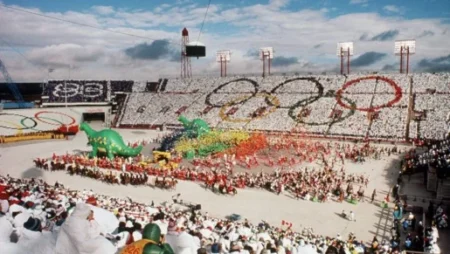
Hosting the Olympics led to major capital projects, including renovations to existing sports facilities, the expansion of the CTrain system, and one of the most important benefits of all, a significant boost in employment. The hospitality industry in particular saw major growth as Calgary welcomed visitors from around the world.

A year later, in 1989, Calgary appeared to have officially established itself as a world renowned city following the success of the Winter Olympics and the Calgary Flames winning their first Stanley Cup championship.
Another fan I spoke with, a longtime Calgarian wearing a vintage Dave Sapunjis jersey, reminded me that the early 1990s brought another difficult period for the city, particularly within the oil and gas industry. However, by then Calgary had established itself as a destination city, allowing tourism and hospitality to become important parts of the local economy. At the same time, the city began laying the foundation for what would eventually become a thriving technology sector.
It was fun learning more about the city of Calgary and the history of the Stampeders, but after picking up my food order, it was time to head back to my seat. Before taking my first bite of this hot dog, however, there was one thing I needed to mention about the concessions at McMahon Stadium.
The organization has clearly put considerable effort into creating a wide variety of food options and providing fans with a quality game day experience. Everyone I spoke with recommended Pigskins BBQ, but the line was simply too long and I was getting seriously hungry. Instead, I decided to go with a Pocket Dog. Still, the sheer variety of food choices throughout the stadium did not go unnoticed.
Read on for my food review….
The only criticism I had, and it is a minor one because I was unfamiliar with the stadium’s layout, was finding the official Stampeders team store. There were several pop up merchandise stands throughout the stadium, but nothing compares to visiting the main team store.
For the record, I did make my way to the official Stampeders team store on the east side of McMahon Stadium before leaving Calgary, and it was well worth the visit.
I can confidently say the league’s partnership with New Era has been a tremendous success. The quality, selection, and overall design of the merchandise rank among the best in professional sports.
Walking around McMahon Stadium felt surreal. I have watched countless CFL games on television played in this stadium, and some of the greatest players, coaches, and moments in league history have been created on this field.
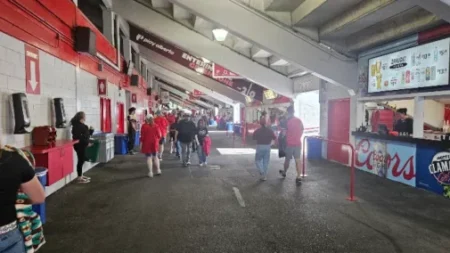
I said it many times to the Calgarians I met during my trip: be careful what you wish for, because once these venues (McMahon & Saddledome) are gone, they are gone. There are not many stadiums like this left in the world, places where generations of memories have been created.
As you walk through the stadium, you see the names displayed on posters and the Wall of Fame. Johnny Bright. Jeff Garcia. Wayne “Thumper” Harris. Kelvin Anderson.
I could still hear the player names that once echoed through the stadium speakers in the background of Labour Day Classics broadcasts on CBC. Players such as Will Johnson, Alondra Johnson, Dave Sapunjis, Mark McLaughlin, Tony Martino, Pee Wee Smith, Doug Flutie, Jeff Garcia, and my personal favourite, Allen Pitts.
You look toward the sidelines and can almost picture Wally Buono patrolling the field for more than a decade. Then there is Canadian sports icon Normie Kwong, the former lieutenant governor of Alberta, who left his mark on the city as a Stampeders player, president, manager, and was even part owner of the NHL’s Calgary Flames.
Then you look toward the south end zone near the goal posts and remember B.C. Lions receiver Darren Flutie’s spectacular touchdown catch in the snow that defeated his brother Doug and the Stampeders in the 1994 West Final, one of the most memorable plays in CFL playoff history.
With 5 minutes remaining before kickoff and player introductions underway, I made my way back to my seat directly behind the Stampeders bench. It was there that I was reminded of another McMahon Stadium fixture no longer part of the experience: the hanging speakers that once hovered above centre field, a familiar sight for CFL fans.
Sitting beside me was a longtime season ticket holder who had worked for the Stampeders during the 1990s. Naturally, I had to ask what it was like being around the organization during those glory years.
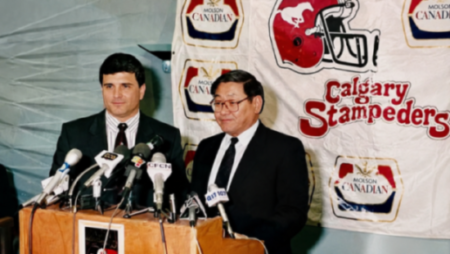
The 1990s redefined the Stampeders franchise and reshaped the Canadian Football League. It was a decade that transformed Calgary from a struggling organization into one of the most successful teams in professional football.
Following Normie Kwong’s hiring of Wally Buono, the next major turning point came in the fall of 1991, when the Stampeders ended their era as a community owned organization and were sold to Larry Ryckman. Just a month later, in only his second season as head coach, Buono guided the Stampeders to the Grey Cup in Winnipeg. Calgary ultimately fell to the star studded Toronto Argonauts, whose ownership group featured Wayne Gretzky, John Candy, and Bruce McNall.
The next monumental move came during the following off season when Ryckman signed quarterback Doug Flutie to a four year, $4.4 million personal services contract. The announcement instantly changed the perception of the franchise, making the Stampeders not only the talk of Calgary, but one of the biggest stories in football. The investment paid immediate dividends. In 1992, Flutie led the Stampeders to a 13 and 5 record before capturing the Grey Cup, the third championship in franchise history.

Calgary followed that with another 13 and 5 season in 1993, but lost the West Final. The following week, McMahon Stadium hosted the Grey Cup, where more than 50,000 fans packed the stadium for the championship game.

The winning continued over the next two seasons. The Stampeders posted a 15 and 3 record in 1994 before suffering one of the most unforgettable playoff losses in franchise history, falling to the B.C. Lions in the West Final on Darren Flutie’s dramatic touchdown catch.
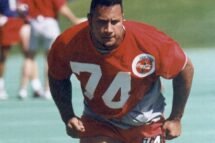
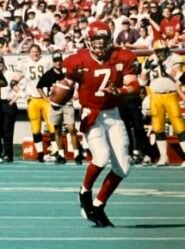
McMahon Stadium brought back another CFL memory, this one from 1995, when Dwayne “The Rock” Johnson was a member of the Stampeders. That season also featured one of the greatest Labour Day Classics in CFL history. After Doug Flutie left the game following just one play with an injury, Jeff Garcia took over and delivered one of the greatest performances in franchise history, throwing for 546 yards and a franchise-record six touchdowns.
The following day at school, Garcia was all anyone could talk about. My friends were convinced the Stampeders had already found their next great quarterback, with some even insisting he was better than Flutie. When Flutie returned later that season, it sparked one of the most memorable quarterback controversies in CFL history.
Calgary once again finished with a 13-5 record and advanced to the Grey Cup, but its pursuit of another championship ultimately came up just short.
This era of Stampeders football is also remembered for influencing today’s mobile quarterback style. Doug Flutie refined many of the concepts that are now associated with the modern RPO offense, crediting CFL legend Damon Allen as the first.
As the longtime season ticket holder and I reminisced about the Stampeders’ incredible on field success during the ’90s, he also shared that the organization was facing serious challenges behind the scenes.
Although the Stampeders averaged more than 26,000 fans at McMahon Stadium during the early ’90s, thanks in part to a period when many Calgarians had strong disposable income, the franchise was still dealing with financial pressures. A struggling oil and gas sector, combined with Ralph Klein’s government spending cuts, impacted corporate support and created additional challenges for the organization.
Those challenges led owner Larry Ryckman to launch another season ticket campaign before the 1995 season. The message was clear: fans and the business community needed to step up, or the franchise could potentially relocate to the United States, with Hartford, San Antonio, and Portland mentioned as possible destinations.
The campaign worked. The Calgary community responded by purchasing the minimum 16,000 season tickets required to keep the franchise in the city. Ryckman was known as a marketing innovator and was ahead of his time in developing new revenue streams, including VIP seating, luxury packages, and aggressive ticket strategies that encouraged fans to purchase mini packs.
However, the stability did not last. Larry Ryckman was later found guilty of stock manipulation, and the Stampeders entered receivership as the organization struggled with financial obligations tied to the operation of the football club.
In early 1996, the franchise was sold to Sig Gutsche, marking another major transition in the history of the Calgary Stampeders.
The Stampeders undoubtedly faced financial challenges under Larry Ryckman’s ownership, but he also delivered the franchise the success it had been searching for. His successor, Sig Gutsche, took a different approach, focusing on cost control and returning the organization to financial stability.
One of the first major decisions was allowing Doug Flutie to leave via free agency and handing the starting quarterback job to Jeff Garcia. The move ultimately proved to be the right one, as Garcia led the Stampeders to the 1998 Grey Cup championship. Before that, however, Flutie guided the Toronto Argonauts to back-to-back Grey Cup titles in 1996 and 1997.
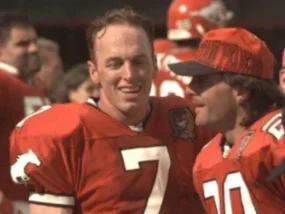
Walking through the concourse earlier, I noticed a wide variety of fan jerseys representing different eras of Stampeders history. One fan’s choice, however, stood out and was either a great sense of humour or a genuine show of support for number 7, quarterback Kevin Feterik. The former BYU quarterback had a unique connection to the organization, as his father, Michael Feterik, just happened to be the owner of the Stampeders at the time.
In 2001, Gutsche sold the Stampeders to Michael Feterik. After narrowly qualifying for the playoffs that season, Calgary went on an unexpected run and won the 2001 Grey Cup championship.
However, the following season brought significant change. After reported tension between Feterik and head coach Wally Buono, including disagreements surrounding the role of quarterback Kevin Feterik, the Stampeders struggled to a 6 and 12 record. Following the season, Buono left Calgary to become the head coach and general manager of the B.C. Lions.
After Buono’s departure, Calgary hired Jim Barker as his replacement in 2003. The Stampeders struggled to a 5 and 13 record, leading to Barker’s dismissal. Matt Dunigan was then brought in as head coach but managed only a 4 and 14 record in his single season with the club.
In 2005, the Stampeders were sold to a local ownership group. Jim Barker returned as general manager, while Tom Higgins was hired as head coach as the organization entered another rebuilding phase that would continue over the next three seasons.
What I found incredible about this era was that, despite the team’s struggles on the field, the fans continued to show up. After years of being a consistently poor team followed by a few seasons as an average club, the Stampeders continued to draw impressive crowds at McMahon Stadium, at times averaging close to 30,000 fans per game.

John Hufnagel returned to the CFL in 2008 as Calgary’s head coach and general manager, immediately turning the franchise around. The Stampeders finished 13 and 5 in his first season and won the Grey Cup championship.
The success created a renewed sense of excitement around the team. The following season, McMahon Stadium was nearly sold out for every game.
Over the next decade, the Stampeders entered a new era of ownership after being sold to Calgary Sports and Entertainment Corporation. During that period, the organization continued its success on the field, making five Grey Cup appearances and winning two more championships.
The success was matched by strong fan support, with attendance remaining among the CFL’s best and averaging close to 28,000 fans per game. The city and Stampeders also hosted the Grey Cup in ’00, ’09, ’19 that generated millions in local economic activity
Then the pandemic arrived, creating another challenge for the organization. Following the return of football, average attendance declined to approximately 23,000 fans, and over the next four seasons the Stampeders averaged closer to 21,000 per game. While those numbers remained respectable by CFL standards, they represented a noticeable decline from the strong attendance figures the franchise had consistently achieved throughout the 1990s and 2000s.
So how did this happen?
Looking back, Calgary experienced another economic boom during the 2010s, driven by strong oil prices and renewed growth in the energy sector. The success of the economy helped fuel strong attendance at McMahon Stadium and created another period of optimism throughout the city.
However, that momentum changed when oil prices collapsed several years later. Calgary entered a slower than expected recovery, and the economic challenges affected the city and both sports teams.
Following the pandemic, Calgary began experiencing another transformation. The province’s ”Alberta is Calling” campaign attracted new residents from major Canadian cities, particularly those facing rising housing costs and affordability challenges in places like Toronto and Vancouver.
At the same time, Calgary continued to diversify its economy, with significant growth in technology and innovation sectors. The city that was once known primarily as Canada’s energy capital has continued evolving into a more diverse economic and cultural centre.
But why hasn’t this recent rebound cycle not help the Stampeders attendance issues?
Well, more on that in a moment. First, let’s get to the important part: the Pocket Dog review.

It was excellent—fresh and delicious. The bun was the standout, elevating what could have been a simple stadium food item into one of the best concession offerings I’ve experienced anywhere.
My rating: 8.2 out of 10.
Half-time break: Calgary leads the Argos 29-18
Back to the concourse I went, where I met another Stampeders fan who has been sitting just a few seats away from me. A season ticket holder for both the Flames and Stampeders since 1992, he offered a unique perspective on the evolution of Calgary sports.
He believes the Stampeders decline had been coming for years. In his view, the organization was caught at the intersection of two major changes: a fan base that had grown accustomed to more than a decade of winning and a changing Calgary economic and demographic landscape.
He explained that after years of success, some fans had become accustomed to winning, and the excitement that once accompanied those victories began to fade. Over time, winning became an expectation rather than something to celebrate.
At the same time, the city’s economic landscape began shifting, creating new challenges for sports organizations trying to maintain long term support.
He also pointed to changing demographics within Calgary. In his opinion, some newcomers who relocate to the city do not immediately develop the same connection to local teams and traditions, making it more difficult for franchises to build the next generation of fans.
Another concern he raised was disposable income among younger generations. Many younger fans are cautious about spending due to concerns about economic uncertainty and the possibility of another downturn.
Finally, he believes McMahon Stadium remains a major factor. While the venue has history, character, and countless memories, he feels it lacks many of the modern fan experience features expected today. Until the Stampeders have a new stadium, he believes attracting and retaining a new generation of fans will remain a challenge.
Next, I walked around the stadium concourse and made my way up to the upper level, where I noticed some challenges with the overall fan flow. Moving through the concourses could be difficult at times, while concession lines and washroom bottlenecks created some frustrations for fans. These are legitimate concerns, especially in an older stadium. However, a new facility does not automatically solve these issues. Modern stadiums can still experience crowded concourses and long wait times unless they are designed with wide, efficient concourses, something that is surprisingly not always prioritized during the design process.
Finally back in my seat as the third quarter began, the Stampeders were playing well and the crowd remained impressively loud throughout the game.
Overall, my McMahon Stadium experience had been very positive. The criticisms are fair: the seating is dated, the concourses can be challenging, and the facility lacks some of the modern amenities fans have come to expect from newer stadiums.
However, my biggest disappointment was not with the stadium itself. It was seeing so many empty seats. After experiencing the atmosphere, history, and passion surrounding the Stampeders, it was difficult to understand why more fans were not in attendance to support the team. Yes, the economy plays a major role in how fans spend their money, but the solution goes beyond simply waiting for better economic conditions. The Stampeders need to continue finding creative ways to attract fans through strategic ticket pricing, flexible packages, and an enhanced game day experience.
However, reaching that next level may ultimately require a partnership between the team and the city to develop a new stadium. A modern facility alone will not solve every challenge, but if designed correctly, it could provide the foundation needed to create a better fan experience and help reconnect the franchise with a new generation of supporters.
Calgary has been through this before, and each time the franchise has found a different way to rebound. The question now is whether history will repeat itself with another “Save the Stamps” moment. Maybe it needs another innovative owner who can reconnect the franchise with the community. Or perhaps, this time, the missing piece is simply a new Football stadium.
The Final: Calgary 58 Toronto 36.
The Stampeders horse ”quick six” has to be tired running up and down the field tonight after scores. It was a great night at McMahon Stadium
Too bad so few people from Calgary got to see the game live.
Next stop: Calgary Stampede